
Posts by Ejide Sodipo
Sovereignty at Sea: Why Nigeria must reclaim control of its Maritime risk

At the start of the conflict in the Persian Gulf in March 2026, the reinsurers underwriting the P&I clubs’ charterers’ liability books invoked their contractual right to withdraw cover for Gulf-related claims on seventy-two hours’ notice. With no alternative sources of capital for these books, the clubs had no choice but to issue cancellation notices to their members. Club leaders privately described their reinsurers’ position as a reflex they could not resist. Much of the reporting at the time framed this as insurers abandoning shipping, and the framing was inaccurate in an instructive way. A decision taken several layers above the clubs, by capital providers most shipowners will never meet, determined overnight what cover existed, for whom, and at what price.
Read MoreNigeria’s Marine Insurance Gap: Why Market Creation Beats Market Entry

Investors searching for the next opportunity in African financial services tend to look in the same places, especially within fintech: payments, digital lending, and remittances. These are real markets, but they are also crowded ones, where returns are compressed by competition and differentiation is increasingly difficult. The larger opportunities are usually elsewhere, in markets that generate substantial and recurring demand but have no domestic supplier at all. Nigerian marine liability insurance is one of them.…
Read MoreSandboxed to Scalable: Nigeria’s Next Insurance Investment
NAICOM established an Insurance Regulatory Sandbox in May 2023. So far, it has drawn most attention as a testing ground for digital and inclusive insurance products. But its most consequential application may be one that has not happened yet: providing the controlled environment in which a domestic P&I club could be tested, de-risked, and brought to the point where it is investable. For anyone weighing where the next opportunity in Nigerian insurance lies, the pathway…
Read MoreThe P&I Mutual Problem: How the New Insurance Nigerian Law Created, and Solved, Its Own Conflict

Nigeria’s most significant insurance reform in a generation has, perhaps unintentionally, made the establishment of a domestic P&I club more difficult to achieve. That is not a criticism of the Nigerian Insurance Industry Reform Act (NIIRA), signed into law in August 2025. NIIRA 2025 is a genuine and long-overdue modernisation of a framework that had not kept pace with the sector it governs. However, embedded within the provisions of the NIIRA 2025 is a fundamental…
Read MoreThe Case for Establishing a Nigerian P&I Club

Nigeria’s recent election back into the Council of the International Maritime Organisation, after 14 years, marks more than a diplomatic milestone. After over a decade outside the world’s most influential maritime decision-making body, the Country has regained a formal voice in shaping global shipping standards, safety norms, and regulatory priorities. Yet, this renewed visibility also raises a more challenging question. Representation in maritime governance is one thing, control over the financial and legal architecture that…
Read MoreBuilding Successful P&I Insurance in Emerging Markets: Lessons from China and Korea
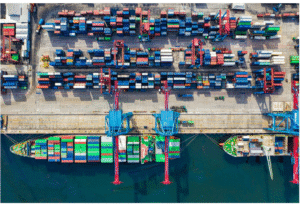
In global shipping, power is often measured in fleets, ports, and cargo volume. But the true determinant of maritime sovereignty lies elsewhere, in the quieter realm of insurance. A nation may move millions of tonnes of cargo, police its waters, and operate modern terminals, but still depend on foreign institutions to price its risk, settle its claims, and define its liabilities. That is the contradiction at the heart of most emerging maritime economies—physical control without…
Read More