
Publications
Sovereignty at Sea: Why Nigeria must reclaim control of its Maritime risk
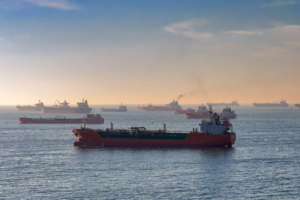
At the start of the conflict in the Persian Gulf in March 2026, the reinsurers underwriting the P&I clubs’ charterers’ liability books invoked their contractual right to withdraw cover for Gulf-related claims on seventy-two hours’ notice. With no alternative sources of capital for these books, the clubs had no choice but to issue cancellation notices to their members. Club leaders privately described their reinsurers’ position as a reflex they could not resist. Much of the reporting at the time framed this as insurers abandoning shipping, and the framing was inaccurate in an instructive way. A decision taken several layers above the clubs, by capital providers most shipowners will never meet, determined overnight what cover existed, for whom, and at what price.
Read MoreThe P&I Mutual Problem: How the New Insurance Nigerian Law Created, and Solved, Its Own Conflict
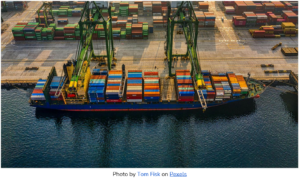
Nigeria’s most significant insurance reform in a generation has, perhaps unintentionally, made the establishment of a domestic P&I club more difficult to achieve. That is not a criticism of the Nigerian Insurance Industry Reform Act (NIIRA), signed into law in August 2025. NIIRA 2025 is a genuine and long-overdue modernisation of a framework that had not kept pace with the sector it governs. However, embedded within the provisions of the NIIRA 2025 is a fundamental…
Read MoreBuilding Successful P&I Insurance in Emerging Markets: Lessons from China and Korea
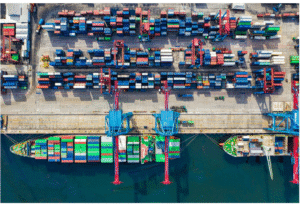
In global shipping, power is often measured in fleets, ports, and cargo volume. But the true determinant of maritime sovereignty lies elsewhere, in the quieter realm of insurance. A nation may move millions of tonnes of cargo, police its waters, and operate modern terminals, but still depend on foreign institutions to price its risk, settle its claims, and define its liabilities. That is the contradiction at the heart of most emerging maritime economies—physical control without…
Read MoreThe Future of P&I Insurance in Emerging Markets: The Viability of Regional Hubs Like Nigeria
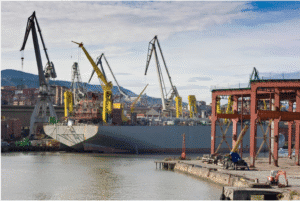
A vessel may load crude in Port Harcourt, discharge containers in Mumbai, or bunker in Mombasa. Yet when a collision, oil spill, or injury claim arises, the decision on liability is often made in London. This is the quiet asymmetry of global shipping. Emerging markets now account for much of the world’s maritime activity, yet the financial and legal mechanisms that govern maritime risk remain concentrated in developed economies. Nigeria embodies this contradiction. It is…
Read MoreWhy Nigeria Needs to Become a Maritime Insurance Hub in West Africa
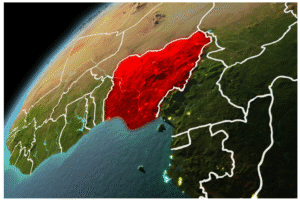
Nigeria is the maritime backbone of West Africa. Its coastline stretches over 850 kilometres and is home to strategically located ports including Apapa, Tin Can Island, Port Harcourt, Onne, Calabar, and Warri. Collectively, these ports handle the majority of regional maritime cargo traffic. In 2022, Nigeria’s ports handled a substantial number of vessel calls, with cargo throughput among the highest in West Africa. This is not an abstract volume; it represents concentrated economic activity dependent…
Read MoreDe-risking Nigerian Maritime Trade: The Case for Local P&I Insurance
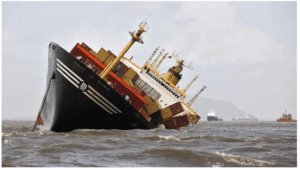
In the world of global shipping, insurance isn’t just paperwork; it is infrastructure. It determines who can trade, under what conditions, and at what cost. For Nigeria, a nation whose maritime trade is vital to its economy and whose oil and gas exports define its fiscal health, the lack of a local Protection and Indemnity (P&I) insurance solution has long meant paying the price, both literally and strategically, for relying on foreign systems to cover…
Read More